goref
快速尝鲜
首先在根目录 go install ./cmd/grf
在 test/testdata/mockleak 目录下执行如下命令
go build -gcflags="-N -l" .
./mockleak # 等待一分钟(通过cmds.AttachSelf函数实现50000次时导出),或者grf attach该进程
go tool pprof -http=127.0.0.1:8080 grf.profile.gz
得到下图:
不同类型的对象的大小会被展示。对象之间的引用关系也会被展示。
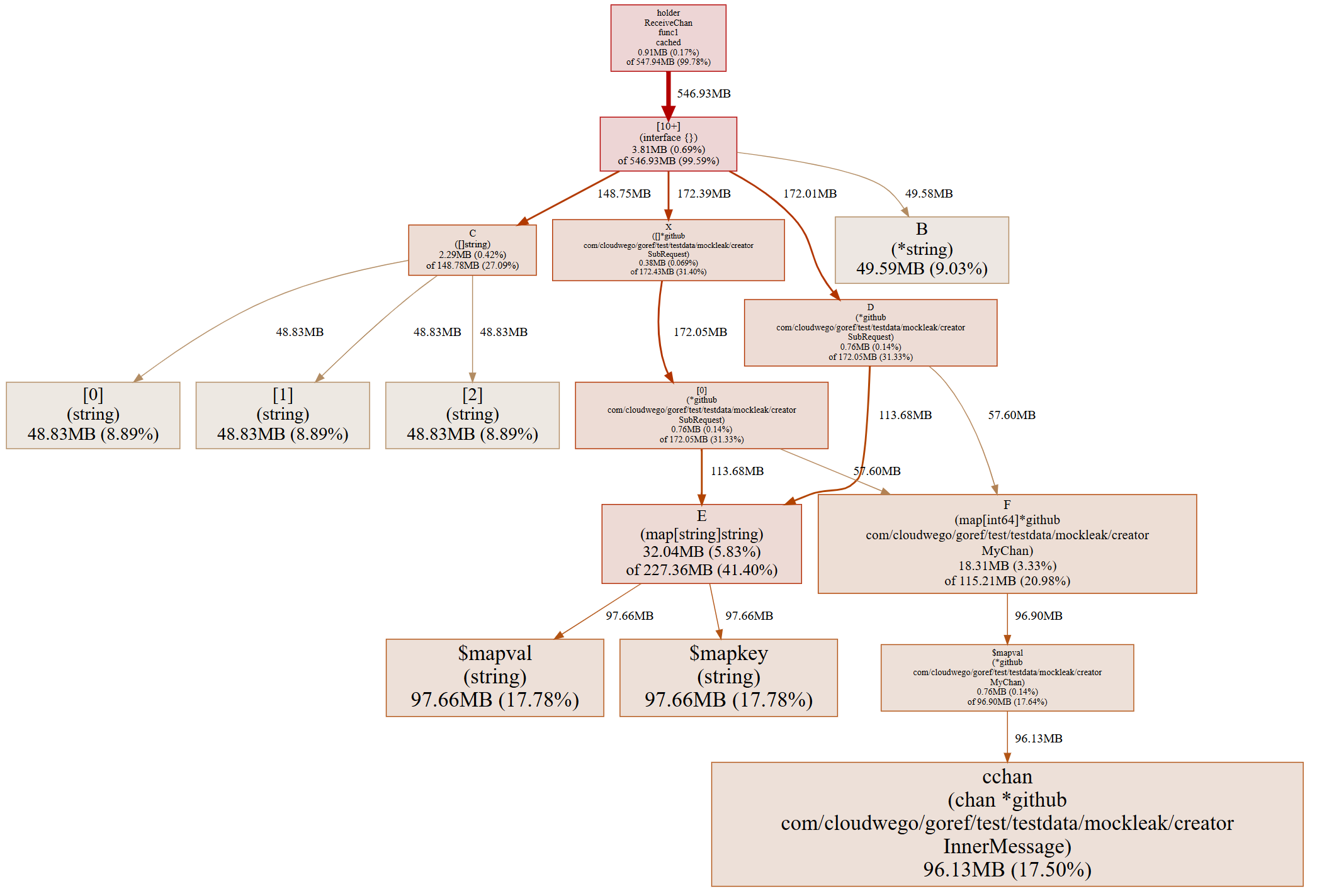
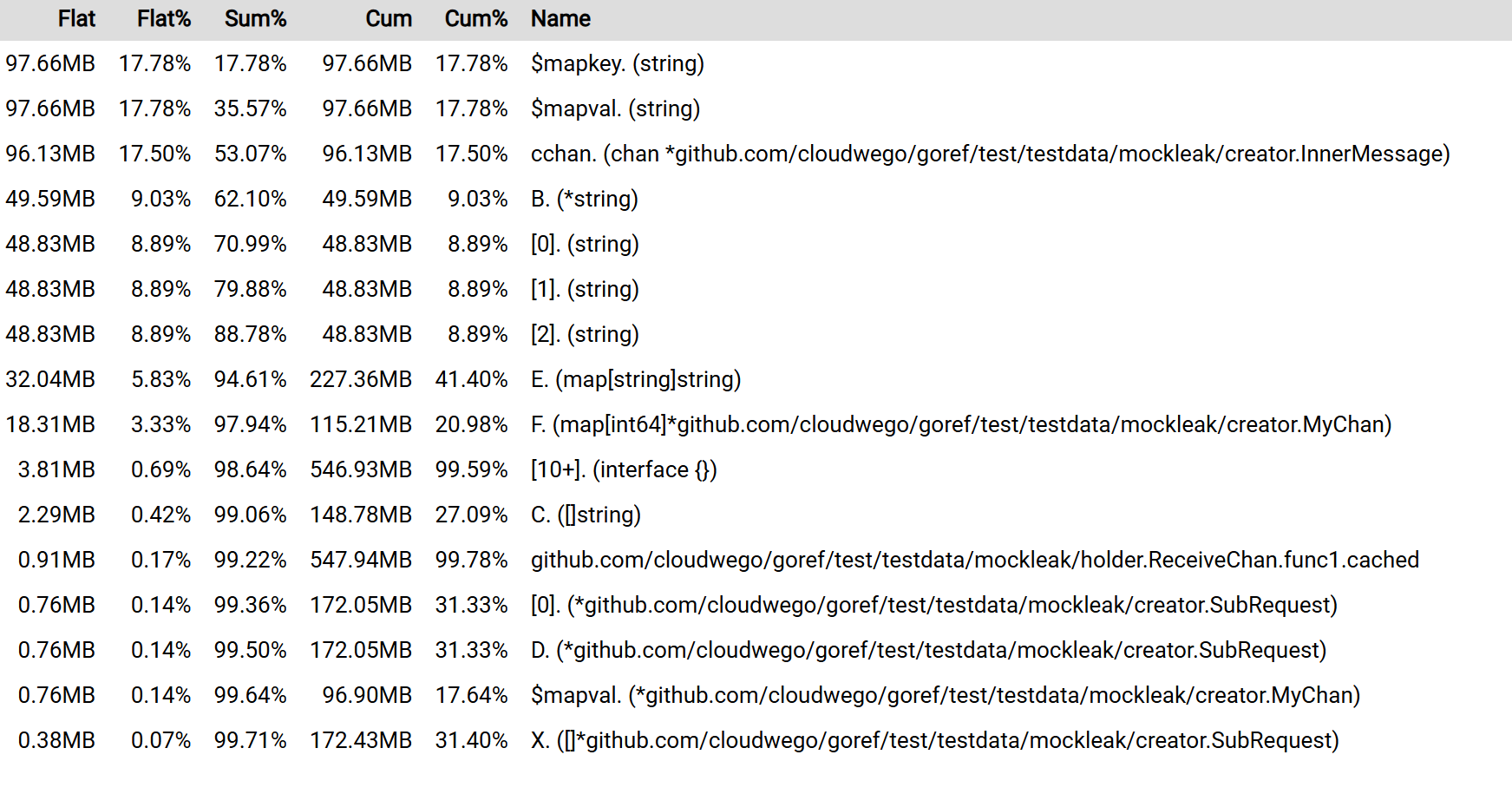
top 如下:
flame graph:

source 视图展示的东西比较诡异。
goref 原理
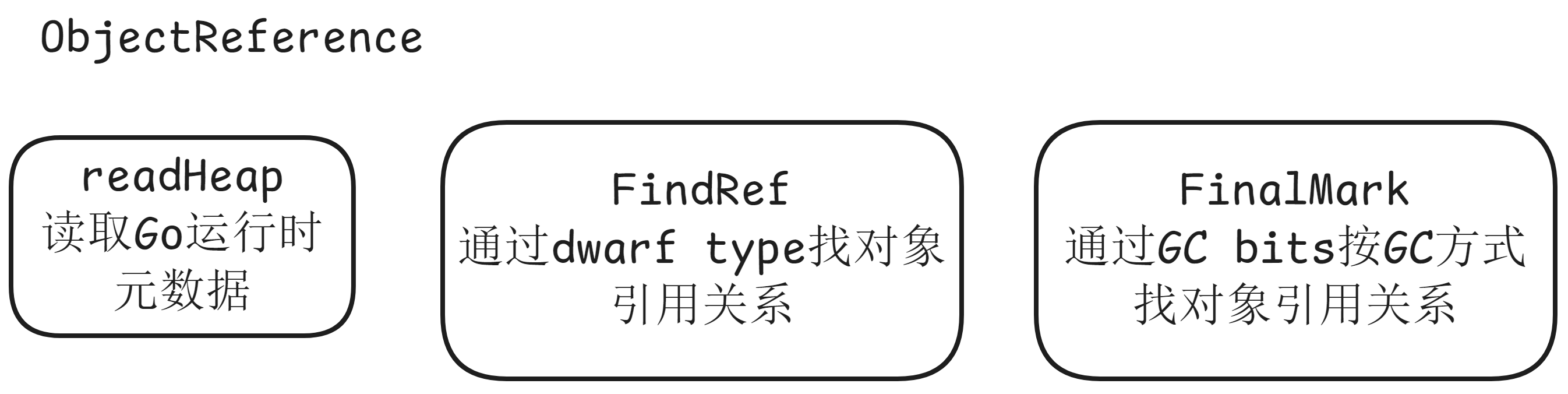
goref 整体工作流程主要3步,如下图所示:
readHeap
goref 首先会 readHeap 从 delve 中读取进程中的变量,恢复 go runtime 中的数据结构,方便 goref 做后续遍历。
region 的概念应该是区域的意思,包含的 mem 是 delve/pkg/proc.MemoryReadWriter
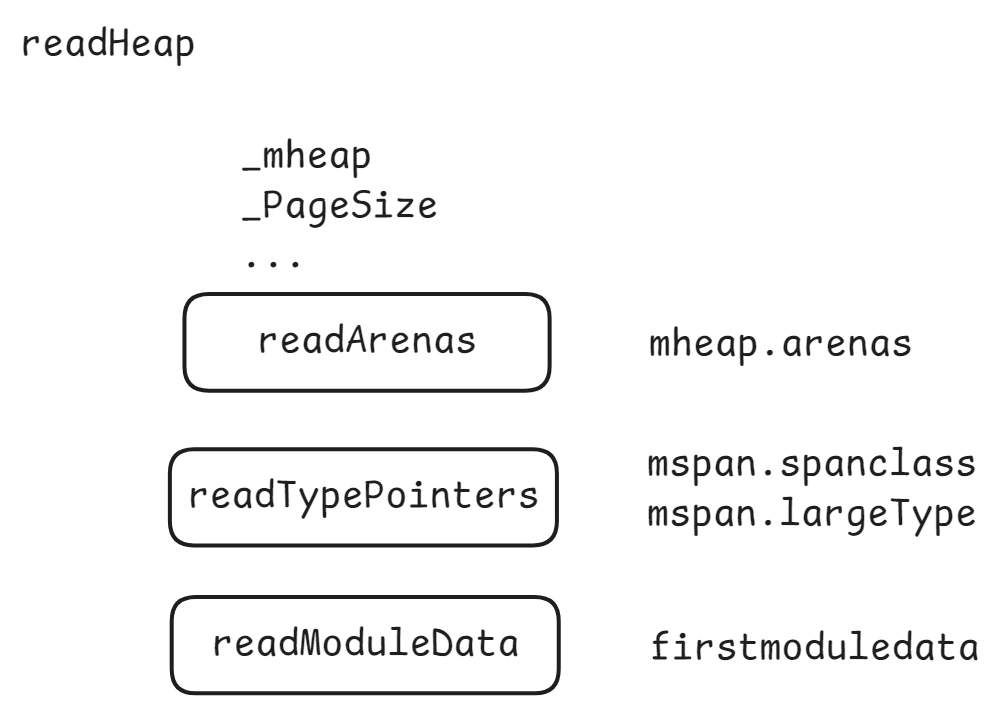
(*HeapScope).readHeap 会读取以下信息:
1. mheap_
2. _PageSize
3. mSpanInUse
4. heapArenaBytes
5. _KindSpecialFinalizer
6. _KindSpecialCleanup
7. arenaL1Bits, arenaL2Bits
8. minSizeForMallocHeader
也会通过 (*HeapScope).readAllSpans 读取所有的 span 信息。
readHeap 还会通过 readArena 从 arena 中读取 bitmap,但是对于 go1.22 添加了 allocation header 之后的实现,则会通过 readTypePointers 获取 allocation header 相关的内容。
在 readTypePointers 中,如果 spanclass 是 noscan,没有指针,则直接返回。
如果 span 中每个对象的 size 较小,那么 heapBits 就会放在 span 末尾。否则就通过 largeType 存放。
最后 readHeap 会通过 readModuleData 从 dwarf 中读取 module data.
readAllSpans
这里除 8 再除 64 的原因是:
- 除 8 是因为指针是 8 字节
- 除 64 是因为使用 uint64 来保存 bitmap
readTypePointers
heapBitsInSpan 在 span 结尾。bitmapSize = spanSize / 8 / 8, ptr size 8, 一个字节 8bit。
readModuleData
runtime.firstmoduledata 的类型为 moduledata,注释如下:
src/runtime/symtab.go#L389-394
// moduledata records information about the layout of the executable
// image. It is written by the linker. Any changes here must be
// matched changes to the code in cmd/link/internal/ld/symtab.go:symtab.
// moduledata is stored in statically allocated non-pointer memory;
// none of the pointers here are visible to the garbage collector.
type moduledata struct {
在读取完堆上的数据结构信息(readHeap)之后,就可以获取 ModuleData、全局变量、局部变量、Finalizer、Cleanup 等内容,实现遍历标记,构建引用图。
getModuleData
通过 linkname 链接到 delve 中的 pkg/proc.(*BinaryInfo).getModuleData.
返回的类型 ([]proc.ModuleData, error)。 delve 中的 proc.ModuleData。
FindRef
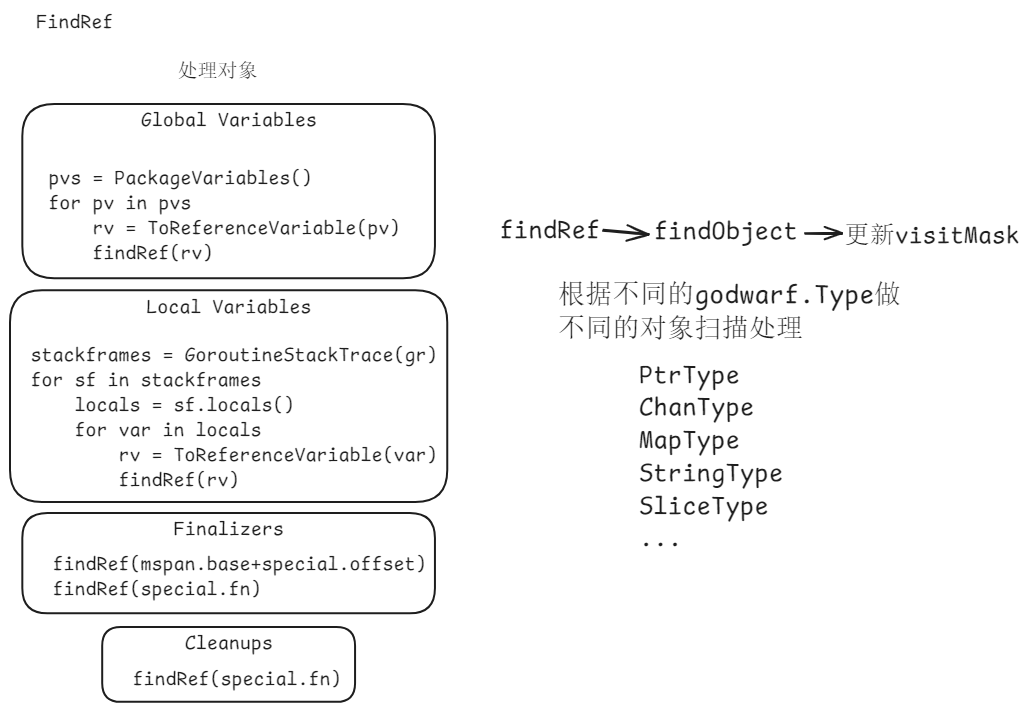
global var 处理
通过 scope.PackageVariables 获取全局变量,然后通过 s.findRef(rv, nil) 给 rv 添加信息。
type ReferenceVariable struct {
    Addr     Address
    Name     string
    RealType godwarf.Type
    mem      proc.MemoryReadWriter

    // heap bits for this object
    hb *gcMaskBitIterator

    // node size
    size int64
    // node count
    count int64
}
局部变量处理
简单来说是从 proc.GoroutineStacktrace 中获取栈帧信息,然后从栈帧信息中获取局部变量。
findRef
如果 x.Name 非空,有名字,那么就在 pushHead 到 idx 这个 pprof 列表中,pprof 列表的 max depth 有限制。然后在函数结尾添加一个注册函数 s.record(idx, x.size, x.count)
如果 x.Name 为空,表示新发现的堆对象,在函数结尾注册一个函数,如果还有下一个指针,则添加到 finalMarks 中。
在判断完 x.Name 之后,判断 x 的 RealType godwarf.Type 实际类型。
PtrType
通过 readPointer 将 GCMask 置零。然后通过 readUintRaw 读取指针值 ptrval,然后对 ptrval 执行 findObject。
如果发现对象,就将这个对象 y 的 y.size 累计到 x.size 中,并且将 y.count 也累加到 x.count 中。
ChanType
readPointer 返回的 ptrval 应该是 *hchan,通过 findObject 得到 hchan
zptrval 是 hchan.buf 值
chanLen 是 hchan.dataqsiz 值
然后从 hchan 对应的 ring buffer 里找数组对象。
MapType
ptrval 是 *hmap。获得得到的 y 是 hmap 结构体。
这个需要了解两种 map 的内部结构才能知道迭代方式是什么。
-
StringType
读str数组和len长度。不过奇怪的是 string 对象也还是要findRef。 -
SliceType
读取 base 和 cap_,然后找数组对象。
InterfaceType
根据 iface 中 _type 和 Type 类型决定是 abi.Type 还是 *_type 结构体。
如果是 *_type 结构体,就通过 newVariable 创建一个类型变量。
对于 indirect interface(即被赋值给 interface 的对象必须在堆上重新分配内存才能表示,不能用原始数据) 来说,rtyp 存储实际数据的指针类型。
itype 是整合得到的实际赋给 interface 包含或者指向的对象的类型。
例如 *int 类型,itype 就是 int,如果是 struct {x, y int},就是 struct,如果是 struct {p *int},就是 int。如果是 **int,那么就是 *int 类型。
然后通过 ptrval 这个指针和 ityp 访问对象。
StructType
对每个域都做查找。
ArrayType
对于 array 中的每个元素都做查找。对于索引在 10 以上的,统一用 [10+] 表示。
FuncType
首先获取 closure 地址,closure 的第一个 field 是函数指针 funcAddr。通过 s.bi.PCToFunc(funcAddr) 获取 proc.Function。
通过 pkg/proc.(*Function).extra 获取 closure 的闭包结构体类型,这个结构体应该是包含了对其他对象的引用,继续对这个结构体做查找。
finalizePtrType
通过 findObject,从 x.Addr 寻找对象。
FinalMark
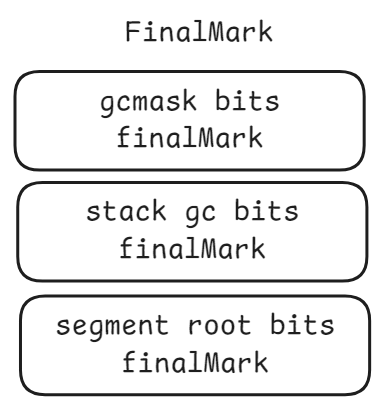
先通过 hb.nextPtr(true) 利用 gcMask bits 找到下一个指针。
ptr 的值从 cacheMemory 函数返回的 cmem 中读取。
然后通过 markObject 函数标记地址。
gcMaskBitIterator.nextPtr
通过 gcMaskBitIterator.addr 字段进行迭代,startOffset 是 addr 相比于 maskBase 的偏移,从 0 开始。ptrIdx 则为 startOffset / 8 / 64,代表 mask []uint64 的第几个 mask,i = startOffset / 8 % 64 表示 mask[ptrIdx] 中的第几位。
j = bits.TrailingZeros64(b.mask[ptrIdx] >> i)。
如果 i 是 0,则看最后一位是否为 0,。如果为 0,表示当前 i 所代表的不是指针,j 是下一个 gcmask 为 1 的地址和 i 所代表的地址之间的距离/8,这时候迭代器地址就会加 8。如果在 b.mask[ptrIdx] 中已经没有为 1 的了,就看下一个 mask。返回 0 就代表已经找不到下一个指针了。
markObject
worklist 算法
伪代码如下:
for !stack.empty()
    addr = stack.pop()
    sp, base = findSpanAndBase(addr) # 找到这个地址所处的span和这个addr所处对象的基地址
    if sp == nil
        continue # span not found
    if !sp.mark(base)
        continue # 这个对象已经标记过了
    realBase = copyGCMask(sp, base) # 两个作用,纠正对象的基地址,更新sp.ptrMask。更新sp.ptrMask主要是靠readType实现的
    hb = GCBitsIterator{realBase, sp.elemEnd(base), sp.base, sp.ptrMask} # 创建GC迭代器,迭代器的mask就是sp.ptrMask
    for
        ptr = hb.nextPtr(true)
        if ptr == 0
            break
        stack.append(ptr)
readType
typeAddr 主要是对象的 header 信息。包含 typeSize, ptrBytes, gcDataAddr
addr 后是对象的信息,记 elem 是对象的起始地址。通过 gcDataAddr + (addr-elem)/64 地址获取 mask。除 64 是因为除 8 (pointer size),再除 8(byte, uint8)。获取到 mask 之后,更新 ptrMask[offset/8/64] 的 offset/8%64 位。
- 需要了解有这种 header 的情况下 header 内存了什么信息。
Note
FinalMark 找到其他指针的示例。
s.pa = &s.a,先遍历到 s.pa,然后发现是一个结构体,再扫描 s.pb,分析结构体其他域。